


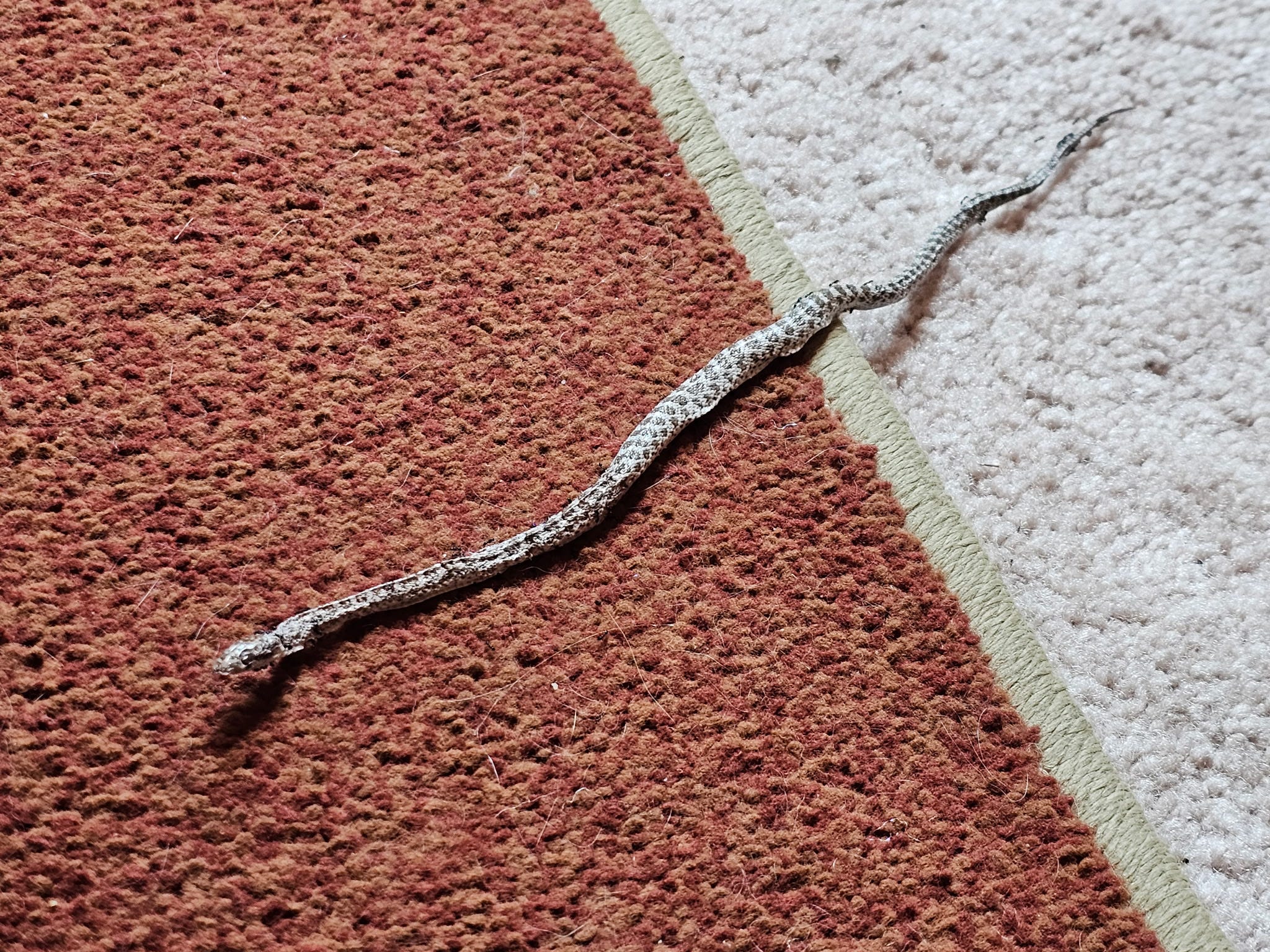
Never, ever, ever publish a photo of a snake. Especially not on the front page. But just. Never.
In my previous lifetime as a journalist and newsroom consultant, somehow this lore got handed down in a newsroom long forgotten, quoted by journalists who obeyed the rule—never a snake photo!—but had no idea of its origin. Any logic the “rule” once possessed had long since gotten lost in translation. It was much simpler to file it under, “Don’t do it. Don’t know why, just don’t.”
Every newsroom had one. We consultants got to calling them the “Snake Rules.” But it applies to writing a book just as much as publishing a newspaper.
You have “Snake Rules,” I know you do. I’m a book coach. As you’re leaping from your beautiful idea to a sturdy outline—>as you’re typing until your fingers fall off to get a first draft—>as you’re launching a search for a literary agent—>you’ve got those “Snake Rules” running in the background. A reptilian operating system is no way to write a book.
It’s my job to drive the snakes out of writing, much as St. Patrick did for Ireland.
Don’t let the “Snake Rules” run your show. Here are a few that tangle writers up. And here’s what to do about them.
Snake Rule #1: Everyone else knows the rules but you.
The best way to know the so-called rules of writing is to read promiscuously. Read far and wide. Let there be no bounds to your reading. Then you’ll discover that every novelist and memoirist is making new rules with every sentence. You’ll see the conventions that govern their writing. When you read, read, read like there’s an endless horizon of books. You’ll install a writer operating system in your core.
You’ll also see when they break the rules. You’ll know they are breaking the rules because you’ll have an inner sense of the convention. You’ll see that it works even though they broke that rule.
The only rule is: read.
Snake Rule #2: I can’t read another book while I’m writing my book because that book may contaminate my book.
The snakes laugh at this one. Me, too.
You have just mortally wounded yourself.
Where are you going to find guidance on how to write your book? The internet? AI’s regurgitated slop from the internet? Clickbait? All that will do is teach you to be conventional. And superficial. To follow everyone else’s rules.
If you want to be a master, go to the masters. You’re writing something that’s different—your book is the only one like it. You’re writing something original. The Irish poet John O’Donohue tells a story about a bank robber, who was asked why he robbed banks. The man simply replied, “Because that’s where the money is.”
O’Donohue goes on to say why he reads books and writes books. “Because that’s where the wisdom is.”
If you only read one book a year, you may run the risk of imitation or plagiarism. So, don’t do that. Read many books. Read like a writer. Always be noticing how the writer constructs the plot, the characters, the sentences, the world she is building. Always let yourself be surprised.
When you do this, you’ll see there are nine million ways to write a book, just like there are nine million names for God.
Or snakes. I actually don’t know how many words there are for snakes.
Snake Rule #3: You think you have to know how it ends.
The most brilliant part of writing is that you don’t. That’s what will make the journey dynamic. Writing craft master Janet Burroway says that the ending must be both “surprising and inevitable.” If you know how it ends, you’re writing the inevitable, which is predictable and boring. If you only half-know the ending, you’ll write a surprising ending.
Snake Rule #4: Write what you know.
In my writing retreats (next one -- Ireland, June 2027), I often give a talk on how to make your story unforgettable. The classic writing advice is to write what you know.
That’s for shite, says Irish writer Colum McCann (Letters to a Young Writer—best writing craft book ever!) “Don’t write what you know, write toward what you want to know,” he says.
It’s all about the questions, not the answers! It’s about the fertile confusion. Let your questions be fertile, and your story will be edgy.
“A writer is an explorer. She knows she wants to get somewhere, but she doesn’t know if the somewhere even exists yet,” writes McCann.
The other best writing craft book, ever, is The Half-Known World by Robert Boswell. To make your writing edgy, you need to create the half-known world. To accomplish this, Boswell says, “the writer must suggest a dimension to the fictional reality that escapes comprehension. The writer wishes to make his characters and their world known to the reader, and he simultaneously wishes to make them resonate with the unknown.”
See my recommended list of writing craft books here. “What I Learned By Sleeping Around (With My Favorite Books)”.
Snake Rule #5: The beginning will just roll out of you.
Sorry, the snakes just told me: You’ll work on the beginning until Eve returns to Eden.
If you have a beginning, be oh-so-happy. Go! That means you listened to the idea when it arrived, fresh in your creative inbox, and you received it. That means you have momentum.
Do you know the characters yet? Do you know what’s backstory and what’s forward story? (You don’t.) It is no matter—you know how to begin.
As you write forward, every 30 pages or so, keep looping back to the beginning. Notice how the way you see the beginning—the whole story—changes. Notice how the beginning always gets better.
This is the big payoff. If you are actively working with a dynamic beginning, you’re doing this right.
I keep a collection of first lines that I use in my book coaching and writing retreats, as well as a cache of first pages so that the writers I work with can see how intricate and exquisite a beginning can be. Which goes back to Rules #1 and #2. We read first pages so we can talk about how the author got there.
A beginning is rarely a pure-birth moment, arriving whole. A beginning is an invitation. Accept the invitation—RSVP yes! A beginning is a curriculum in the finest craft of writing. Honor it. Honor other writers’ beginnings. Commit wholeheartedly to the process.
Snake Rule #6: Show, don’t tell.
You need both. Lean hard into “show,” but you need summary, too. You need a narrator to guide the story, and establishing that point of view and voice is the most important decision you’ll make about your story.
Build your story in scenes. Link your scenes with narrated summary in a strong voice—a voice assures us something is at stake and a scene is coming that will break your imagination, it will be so dramatic.
You must make your summary passages sing with mini-scenes and vivid bursts of sensory detail and dialogue that point to scenes.
Your allegiance is to scene.
But the way you make a story move is a mix of scene and summary.
Snake Rule #7: This may harm someone, so I should hold back.
This most often comes up with memoir, where you are writing about real people in your life. But it can come up in any writing that disturbs someone—pries them out of their comfort zone.
If you are writing a book, you’re aiming to change something. It may be that you want your someone on the other side of the page to think or feel something in a new light. It may be you want to evoke empathy. Fiction and memoir, of all the dramatic storytelling arts (including movies, television, plays, poetry, songs, lead the way on empathy. If your book changes the someone thinks or feels, you just won first prize.
But you won’t produce a change of perspective if you shy away from disturbing your reader. You don’t need to shock your reader. You don’t need to trigger their traumas. You only need to write a story that will equip them to think about it differently.
So, at the same time you’re booting them out of their comfort zone, you’re equipping them to work through it. Through story.
Once, I was in a writing workshop where one man objected to the stance my characters were taking about love and marriage because it was unconventional and informed by a women’s take on marriage, not a man’s. He did not like that—therefore he did not like the characters or the writing, and he told me I couldn’t write my way out of a paper bag. I wanted to tell him I avoid cliches like the plague, but you can see…we weren’t going to work this out.
I left the workshop believing I had failed to get the constructive feedback I needed so I could complete the novel. And then I realized…I just got the most useful feedback of all. I had disturbed him. I had wanted to write a novel that subverts our ideas about marriage, and I had accomplished that.
Snake Rule #8: If the middle is hard, it means ‘abandon ship.”
No, it probably means you need to up your game. Ask more of your book. You’re 60 or 100 or 150 pages in. All of this mattered so crucially, and that’s how you got those pages. Now, make it matter more. More is at stake, not less. Make it harder for your character. Be brave. The middle requires courage.
Snake Rule #9: I must write all of it in chronological order so the reader can follow it.
Stories are about change. Stories are about making meaning of events. Chronology can be your friend because of simple cause and effect. Linear time does that: When this thing happens, it makes this next thing happen.
Stories aren’t always chronological. In fact, they rarely are. See Rule #2. Read, read and read more. See if you can find a story you love that doesn’t have flashbacks or flash-forwards.
And there are other kinds of time. Deep time. Loop back to John O’Donohue. Consider that books are where the wisdom is, and consider that time makes meaning. If time makes meaning and the Greeks had four words for time (chronos, kairos, aion and hora), then take on the idea that one of your literary tools is time. (Other best writing craft books, ever, The Art of Time in Fiction: As Long As It Takes by Joan Silber and The Art of Time in Memoir: Then, Again by Sven Birkerts, from “What I Learned By Sleeping Around [With My Favorite Books]”.)
Let’s pause for a moment. I know I just made writing your book harder because I told you to let story govern your story, not chronology. Now you have a fun (!) organizing project. (See my post, “Chronos is Your Fickle Friend, Kairos is Your Forever Friend.”)
Remember you’re writing a story, not a situation. Situations are mildly interesting, but they are inert. Situations are possibly entertaining. Stories have a dramatic arc. Stories change you. Stories can’t not-change you.
So get adept at flashbacks and flash-forwards. Get wise about how to use backstory. Get wiser about what makes a plot propel forward—what makes readers turn pages. There is a rule about flashbacks: The moment you go back must be potent. The purpose of the flashback is to illuminate something that moves the story in a new way. When you return to the present storyline, you return with great momentum. If your flashback is doing that, keep it. If not, it’s in the wrong place or it’s not needed.
Snake Rule #10: You can never do that.
And yet someone has. Whether it’s ‘you can never write about abortion’ or ‘you can never write about divorce,’ or whether it’s a topic so timeworn that the world never will need another memoir about cancer or alcoholism—just stop. Stop yourself right now.
Notice a few books on the shelves with me. Let’s pretend we’re in Barnes & Noble, and I point out to you Maggie Smith’s You Can Make This Place Beautiful (Exhibit A: You can write about divorce) or Allison Sweet Grant’s Lump (Exhibit B: You can write about breast cancer).
What the marketplace demands is a fresh take. (Yesteryear is a fresh take: It’s a trad mom thriller.) It’s vital that you know what’s fresh and what’s timeworn. Which takes me back to Rules #1 and #2.
As you write your book on a timeless topic such as divorce, abuse, addiction or disease, you avoid being timeworn by elevating, elevating, elevating and elevating again your topic. It’s all about the angle. It’s all about the structure you choose. The language, the characters, the voice.
Snake Rule #11: Agents aren’t buying X.
We all believe this until it isn’t true. Trust me, the book industry can be as sclerotic as the movie business in risk-taking. Who could see that suddenly, in 2026, there would be two movies that would get Gen Z in the theaters? (Backrooms, Obsession) Not Hollywood, apparently. Until A24 and Focus Features came along and decided that two Gen Z filmmakers were worth banking on.
They don’t acquire you because you fit in. They acquire you because you stand out.
About the original “snake rule”
Once there was a newspaper. Let’s just say it was in the Midwest. A nice family-owned newspaper in a farming community, where people worked hard, owned tractors, wore flannel and voted. They held town halls.
The publisher of the newspaper had a wife. One day, the copy desk pulled a file photo of a snake. No one remembers why the photo of the snake illustrated the story. Maybe it was about gardening. Maybe it was about politics.
The only thing anyone remembers is that the publisher’s wife, when she unfurled her morning newspaper at the breakfast table, suffered a fright.
From that day on and into the millennia beyond, no one has ever published a snake photo again.
About that snake photo I just published
It slithered over the carpet of my living room, and there it stopped, so utterly still, that all evidence pointed to: One of the cats had bopped it on the head with a sharp claw.
No more slithering for you.
Dead snake, best kind.
I’m worried, though. Someone told me once never to publish a snake photo. I just can’t remember, for the life of me, why.
Taking us out with: Copperhead Road by Steve Earle
Ironic, but another track on this album is “Snake Oil.”
The types of scientists who study chimps once did a sociological experiment (don't ask me for specifics; I either don't remember them or never knew) in which they gave a group of 5 chimps lots of bananas -- and also one 'special' banana. The special banana was hanging from the ceiling, and you had to climb up a little ramp to get it.
When a chimp tried to get the special banana -- they got sprayed with cold water, and invariably ran away. The chimps soon learned not to go for the special banana.
Then things got interesting. The scientists began to switch out chimps. They took out one chimp, and introduced a new chimp -- and the four chimps who'd been there since the start quickly warned the newcomer not to try to get the 'special' banana. I don't know precisely how they warned the new chimp. Chimps have their ways.
And then the chimp-ologists switched out another chimp. And another. And, each time, the newcomer was warned not to go for the 'special' banana.
Until, finally, there were 5 'new' chimps in the room -- 5 chimps who had never seen a fellow chimp get sprayed with cold water. And yet they all knew the rule -- you never go for the 'special' banana. They didn't know why, exactly. They just knew it was 'a bad thing to do'. For unspecified reasons.
And none of them went near the special banana. Without ever really knowing why.
Sounds like a 'snake rule' to me.
Also -- holy moly, you have snakes slithering across your living room floor! Why on Earth are you worrying about posting photos of snakes -- or about anything else at all, for that matter! You have legless reptiles infesting your home!
This is a witty and useful post about writing rules we don't realise we're steered by, and why we should question them. They may just help you past a block you aren't fully aware of.